Designing Buildings That Tread Lightly
Since the beginning of our practice in 2001, sustainability has been understood as an essential part of good design — caring for the environment while creating spaces that are comfortable, efficient, and enduring.
Our approach focuses on reducing a building’s long-term environmental impact through practical, well-integrated strategies rather than add-on technologies. Sustainability is considered from the earliest stages of design, influencing orientation, materials, construction methods, and daily building performance.
Key strategies often include:
- Water conservation, rainwater harvesting, and grey-water recycling
- Renewable energy systems such as solar power
- Daylight-led planning to minimise daytime artificial lighting
- Natural ventilation and climate-responsive shading
- Responsible material use and waste reduction during construction and occupation
A sustainable building need not follow a single aesthetic or rely only on traditional materials. Existing buildings, too, can be meaningfully retrofitted to improve efficiency, reduce resource dependence, and extend their lifespan.
Turnkey Green Construction
For clients seeking a hands-on construction partner, the studio offers turnkey execution using environmentally responsible building techniques. Construction is approached with the same care as design — emphasising efficient material use, reduced waste, and thoughtful craftsmanship.
Depending on project needs, methods may include mud-block construction, filler slabs, sloping filler roofs, and natural plasters. Our long-standing network of contractors, craftsmen, and consultants works collaboratively to deliver projects responsibly from concept through completion.
Case Study — A Farmhouse That Leaves Little Behind
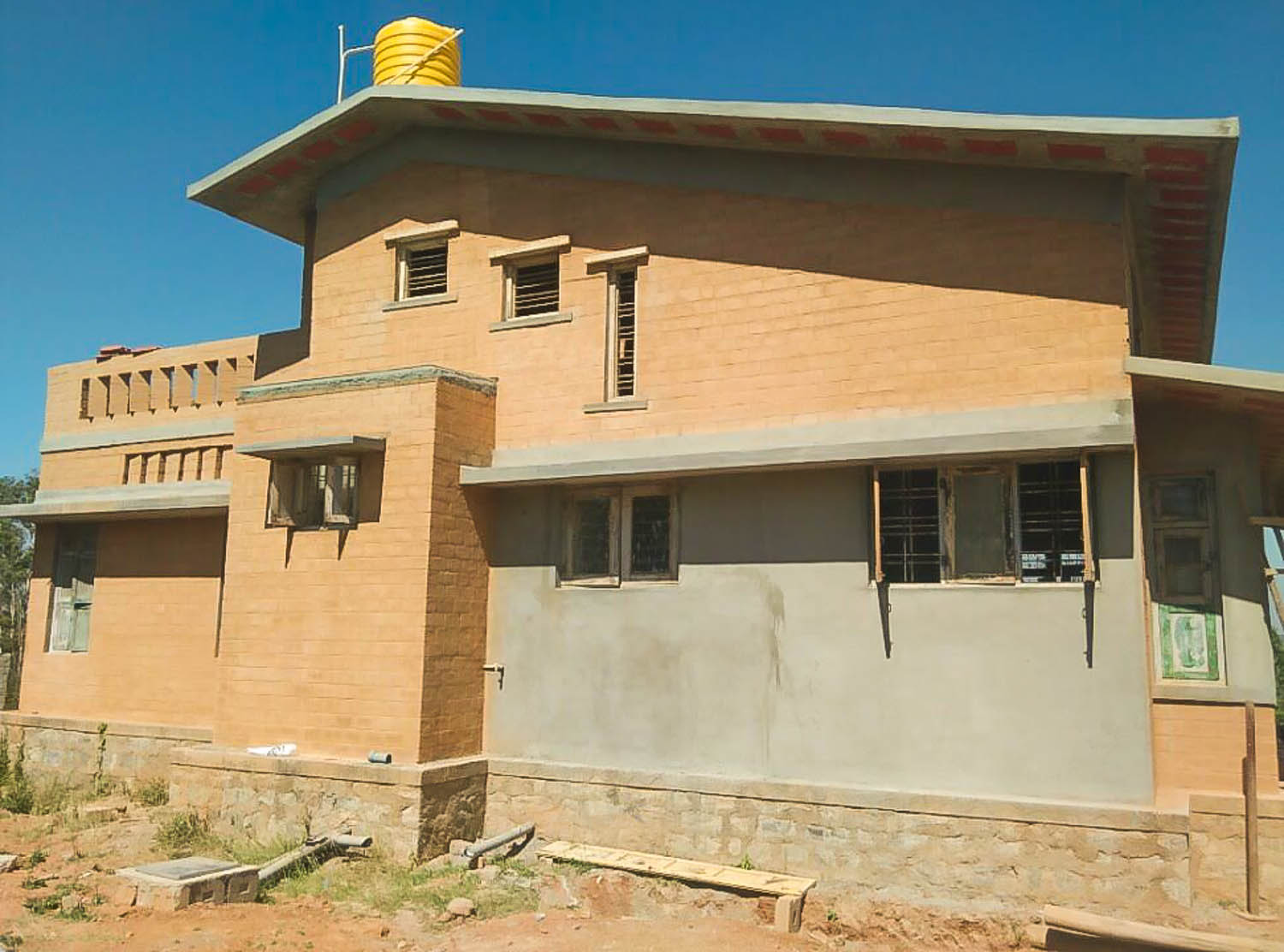
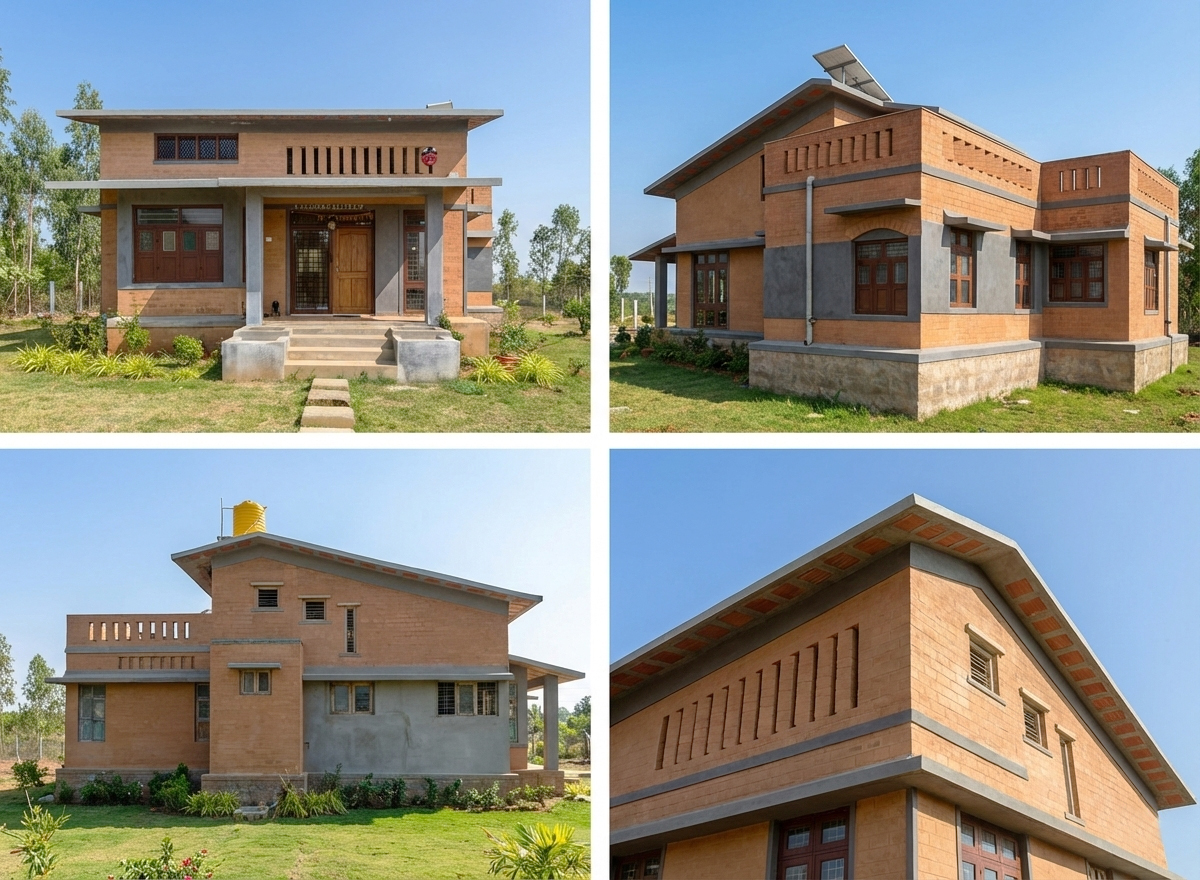
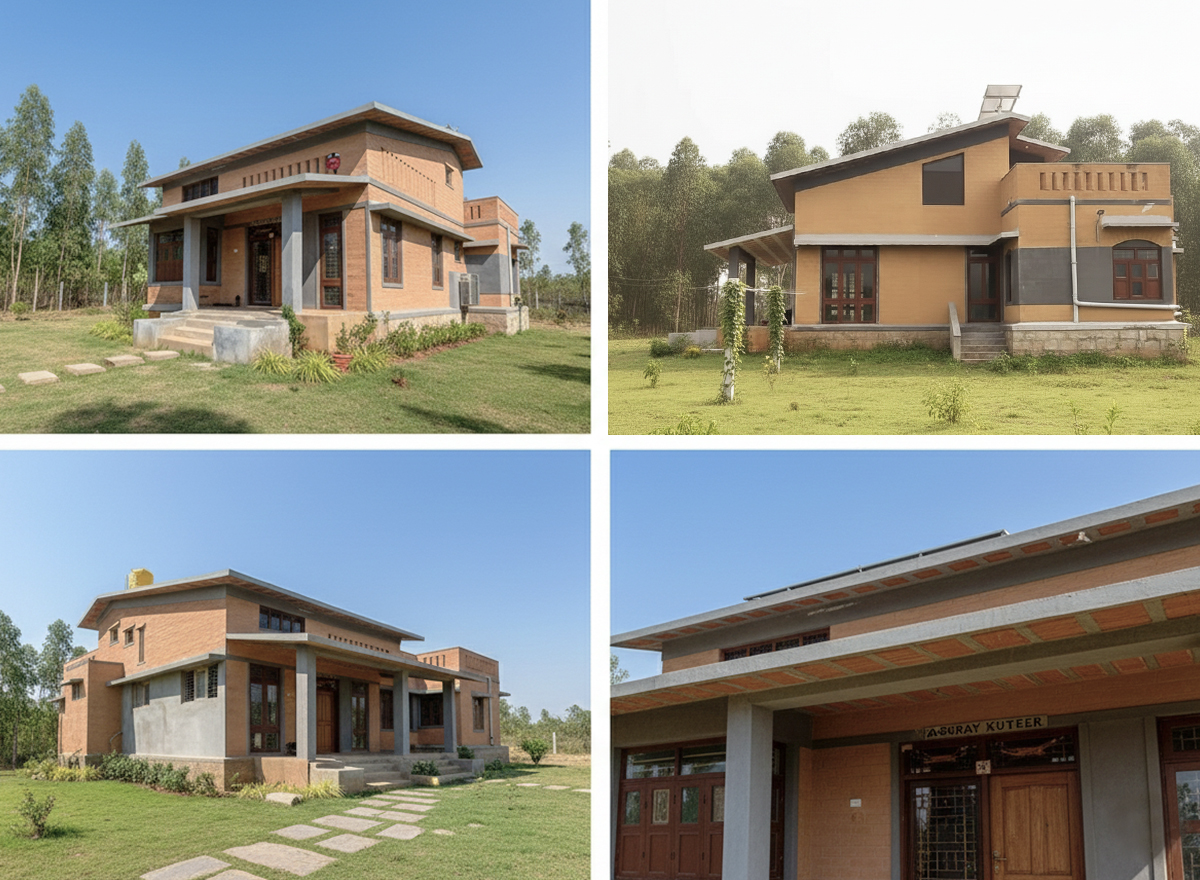
The Indalwadi Farmhouse demonstrates how resource-conscious design can translate into lived experience. Conceived as a relaxed weekend retreat near Bangalore, the house balances openness, comfort, and environmental responsibility while maintaining a low-impact construction approach.


Key Sustainable Features
- CSEB mud blocks produced on site using local soil and granite dust
- Sun-dried blocks cast in precise quantities to eliminate waste
- Reused doors and windows sourced from demolished buildings
- Recycled steel elements integrated into the structure
- Filler slabs reducing steel consumption by over 30%
- Minimal cement plaster used only where weather protection required
- Natural interior finishes without paint
- Complete rainwater harvesting and groundwater recharge
- Grey-water recycling supporting landscape and kitchen garden
- Solar-powered operation via rooftop system
The result is a home that lives lightly on its site — comfortable, resilient, and closely connected to its environment.


