
Project Overview
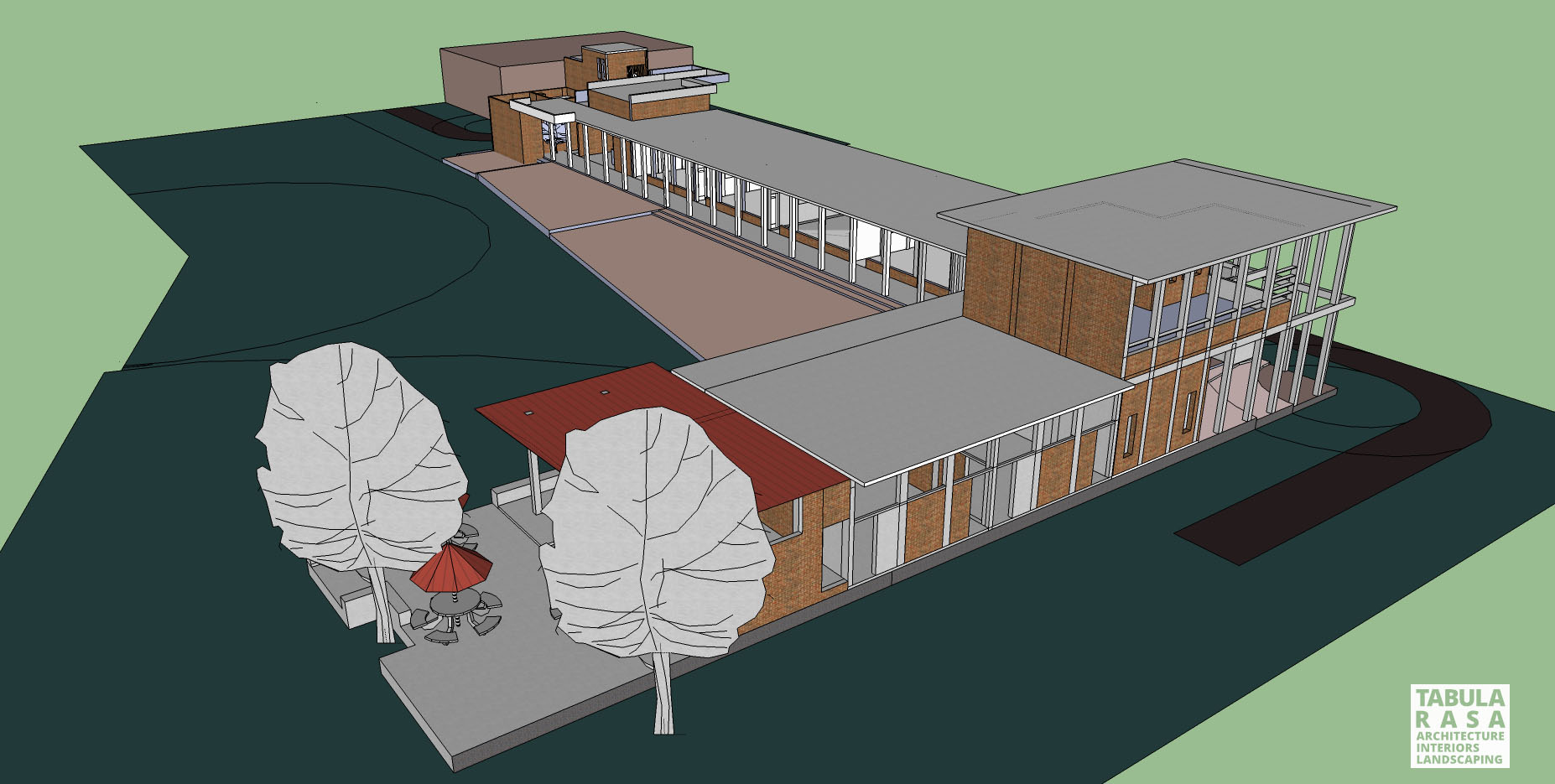
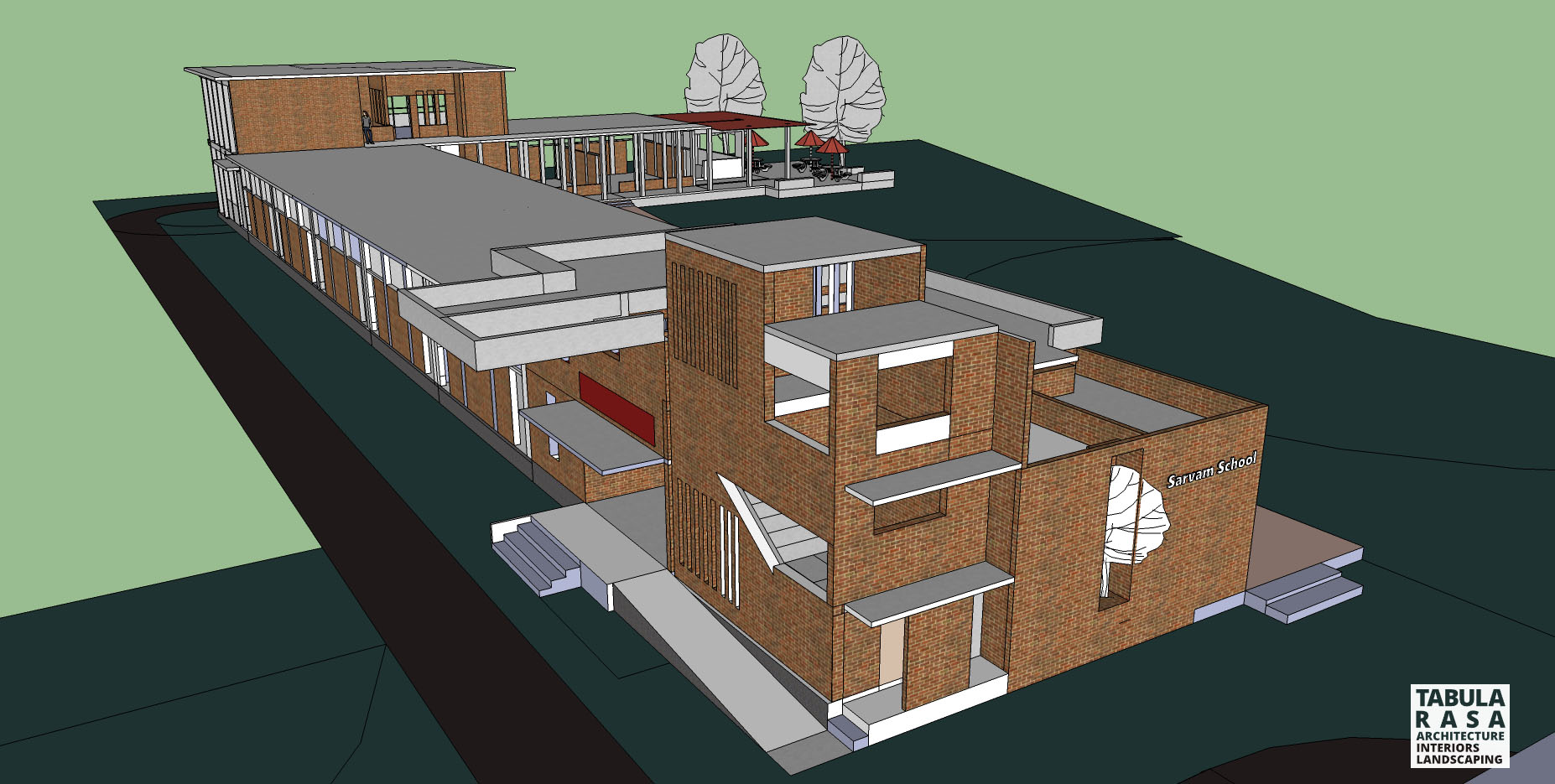
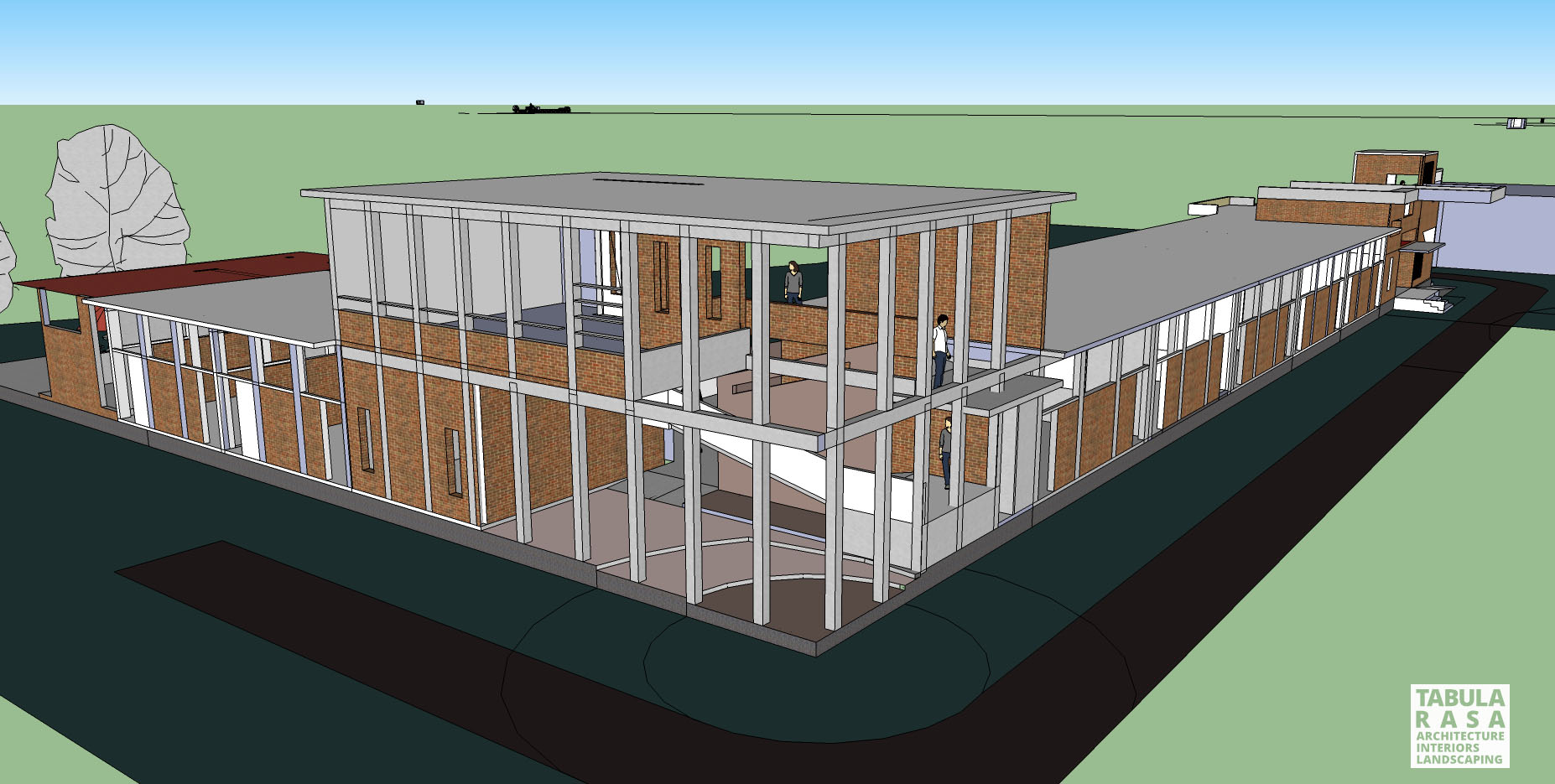
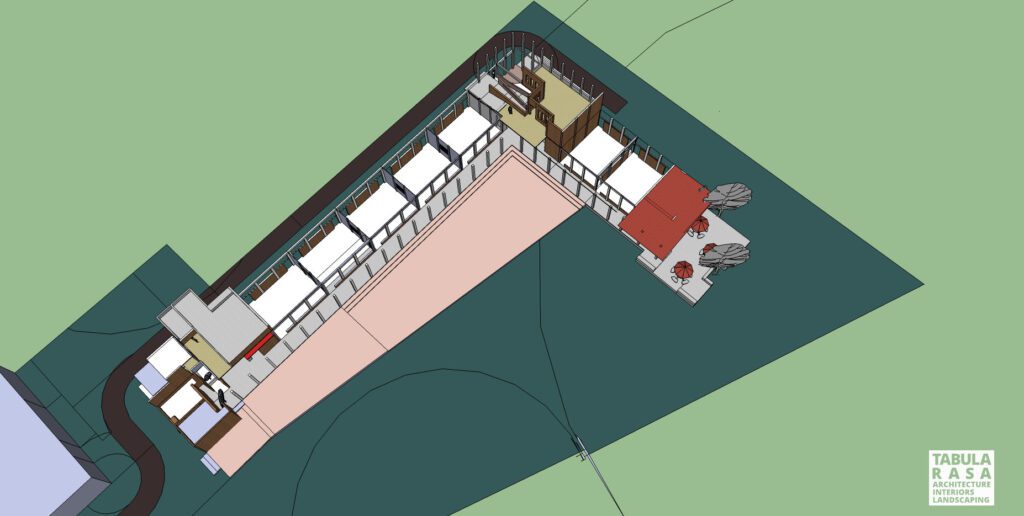
This school is envisioned as a learning environment rooted in Sri Aurobindo’s philosophy of nurturing India-centric citizens with a global outlook. The campus is located on a long, narrow parcel of land, bordered by farmland on two sides, lending the project a strong relationship with its natural surroundings. The director’s residence is also located on the site, with independent access to maintain privacy and ease of movement.
Site Planning and Campus Layout
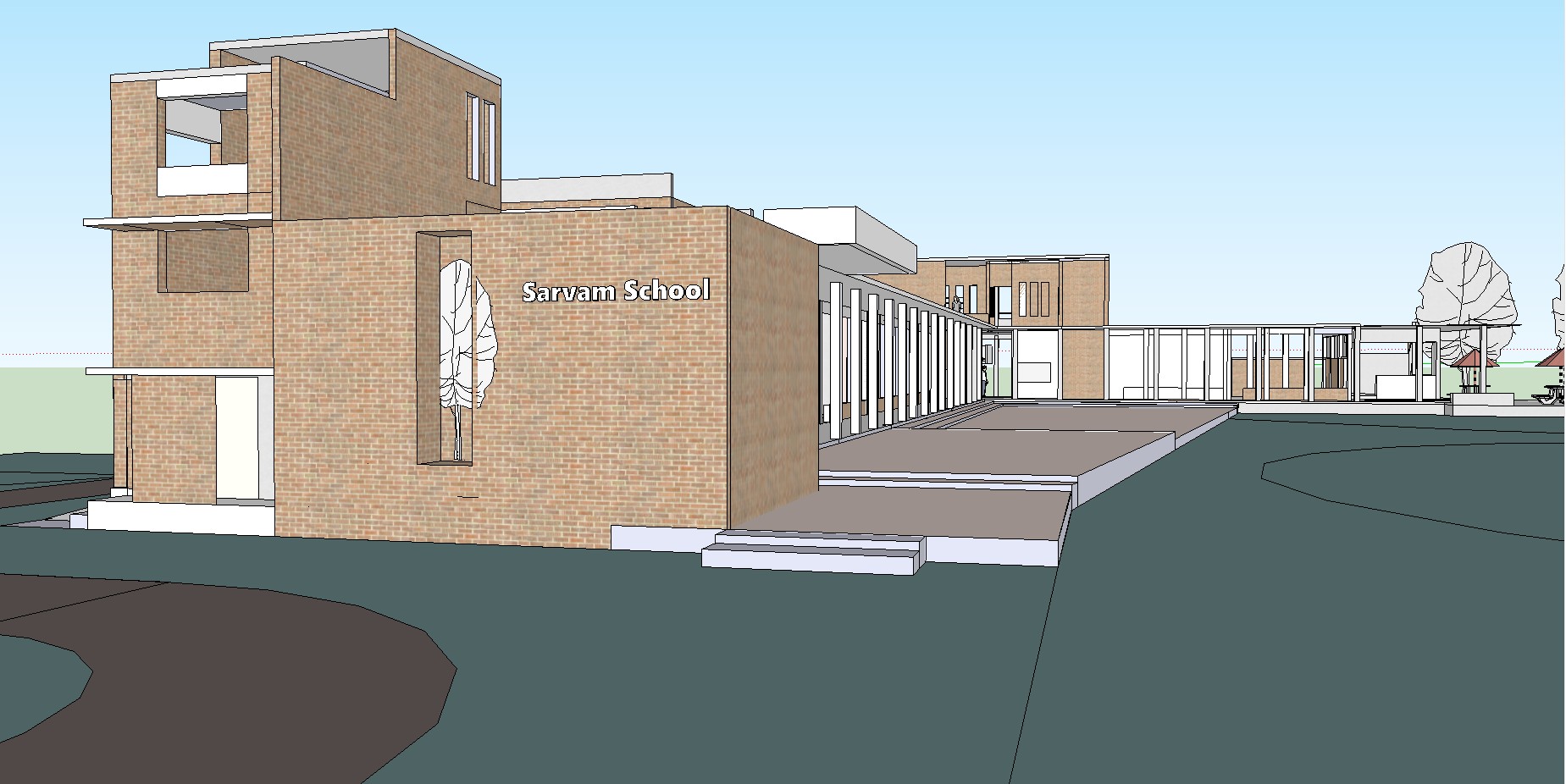
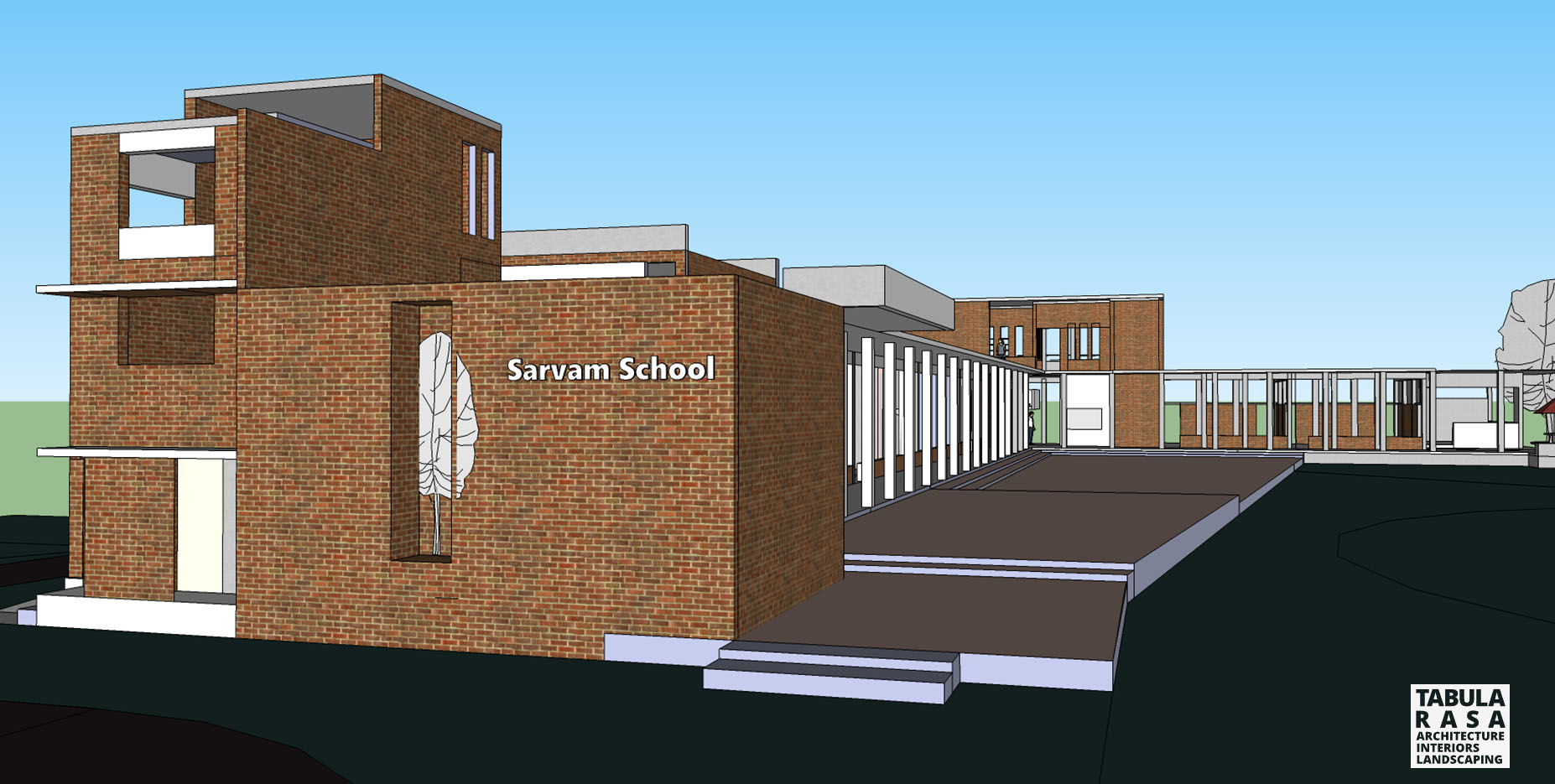
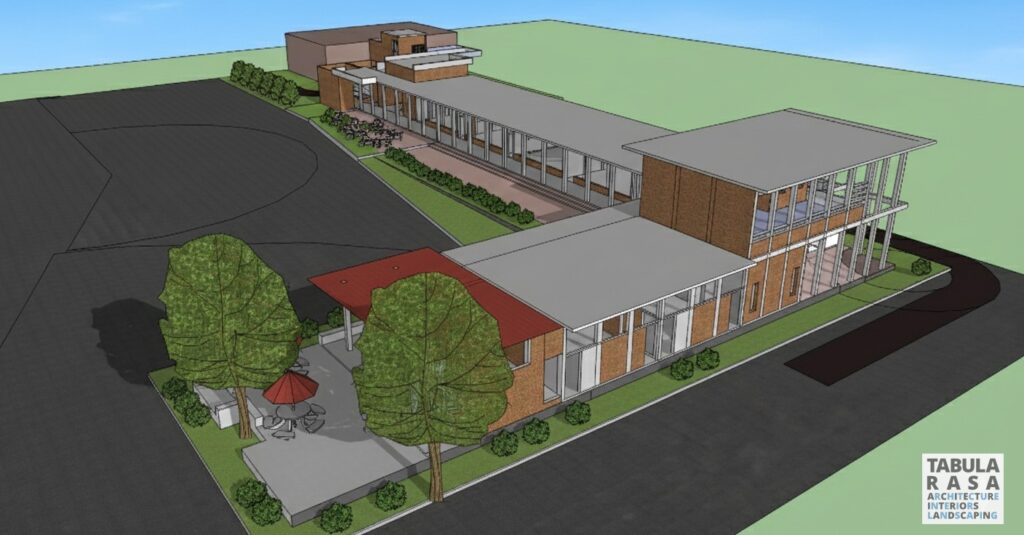
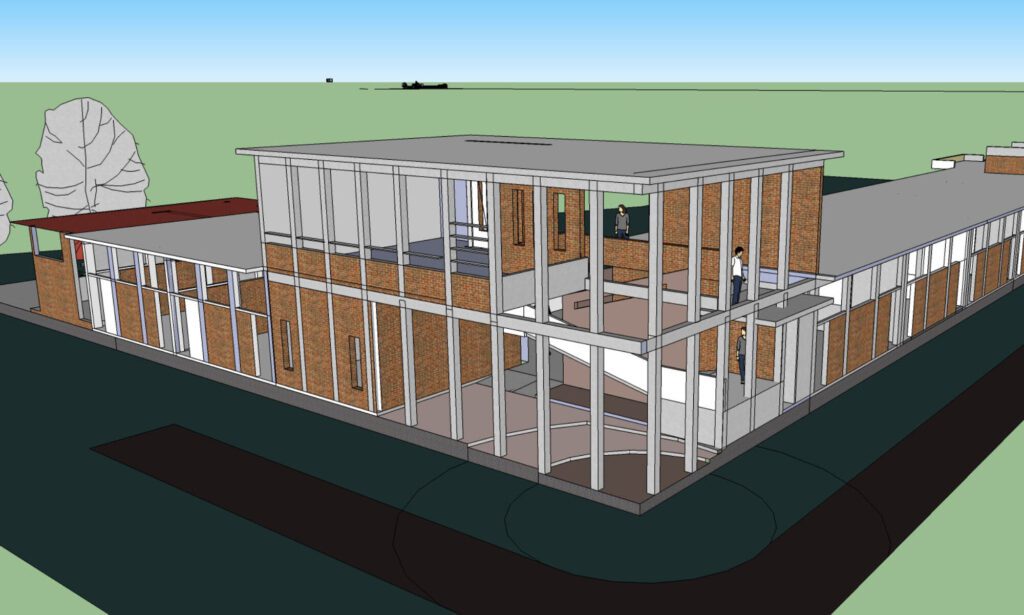
The linear nature of the campus layout emerges from both the proportions of the site and the functional requirements of vehicular circulation, including parking and movement of school buses. Public and administrative functions are placed near the site entrance, allowing the academic areas to remain protected and inward-focused as one moves deeper into the campus.
Learning Spaces and Classrooms
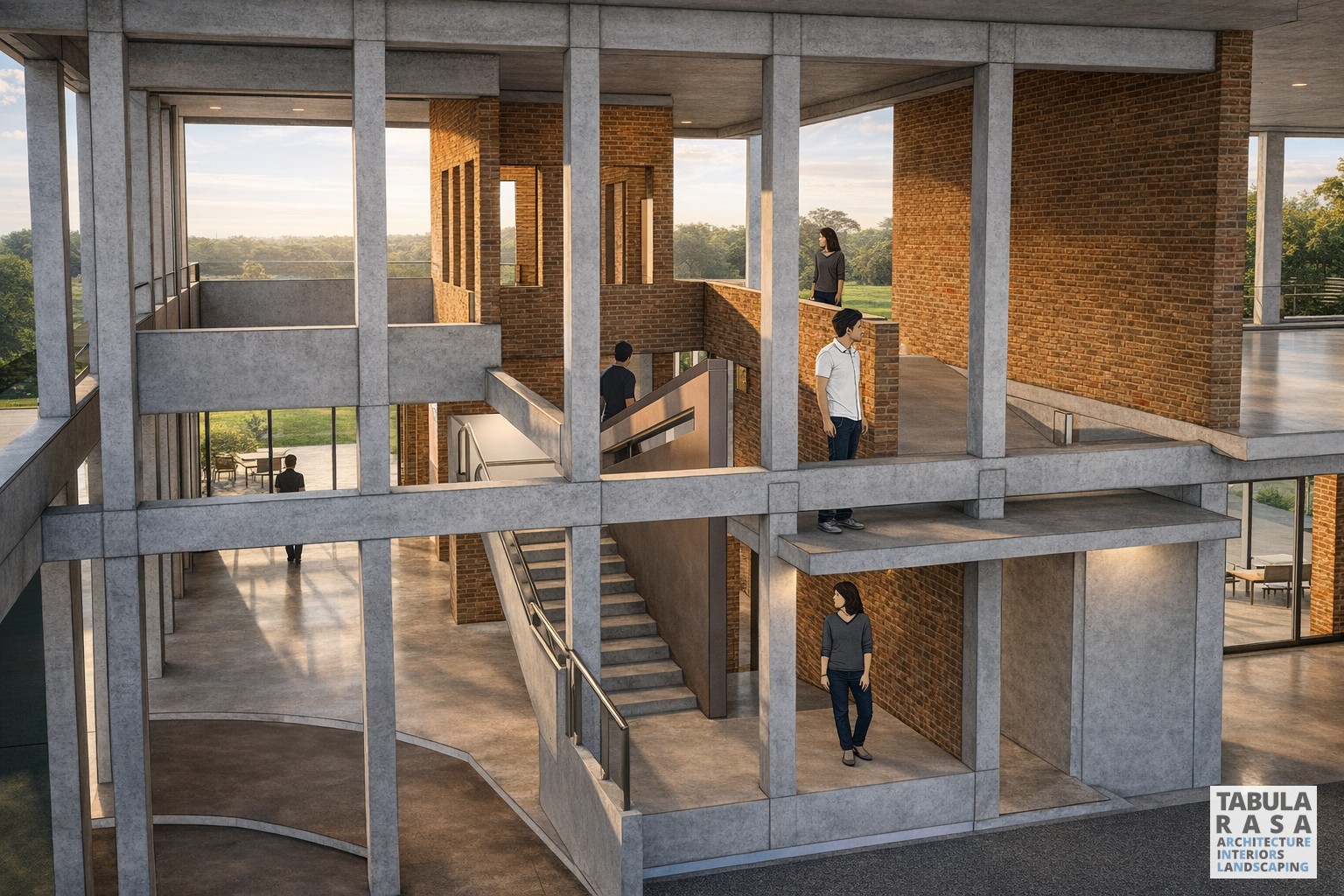
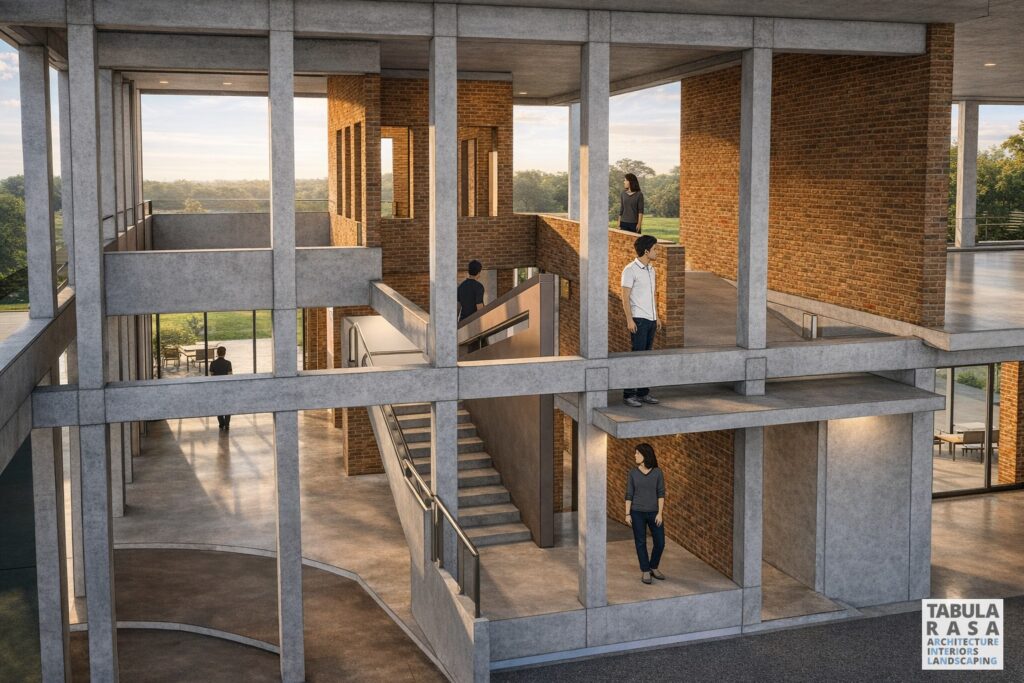
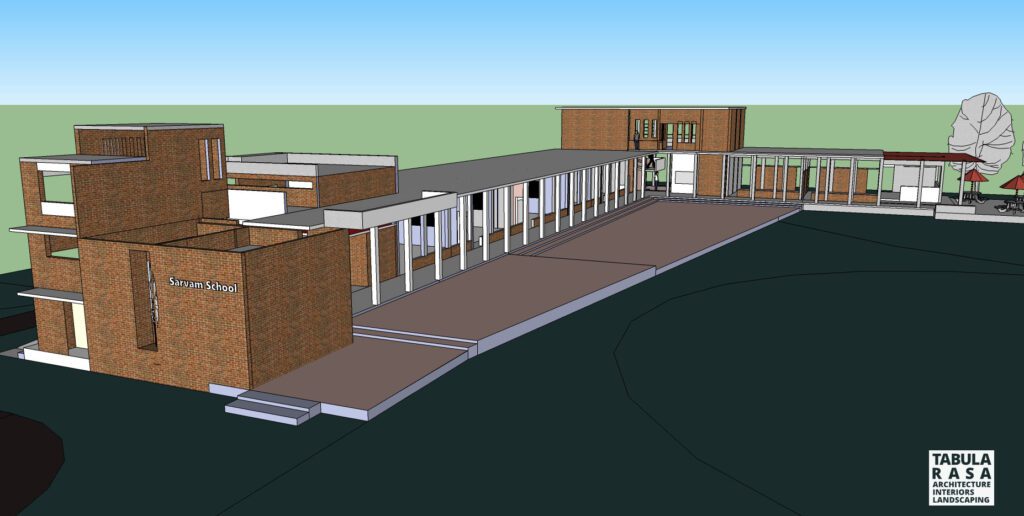
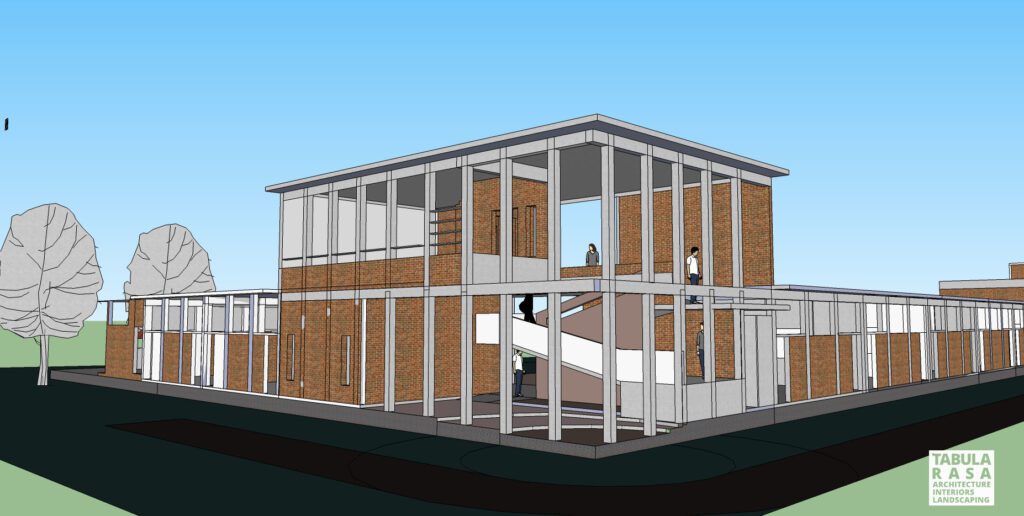
Classrooms are designed to support open and interactive modes of learning. Large openings with low sill heights—doubling as informal seating—blur the boundary between indoors and outdoors. These openings encourage visual connection, natural ventilation, and a strong relationship with the landscape.
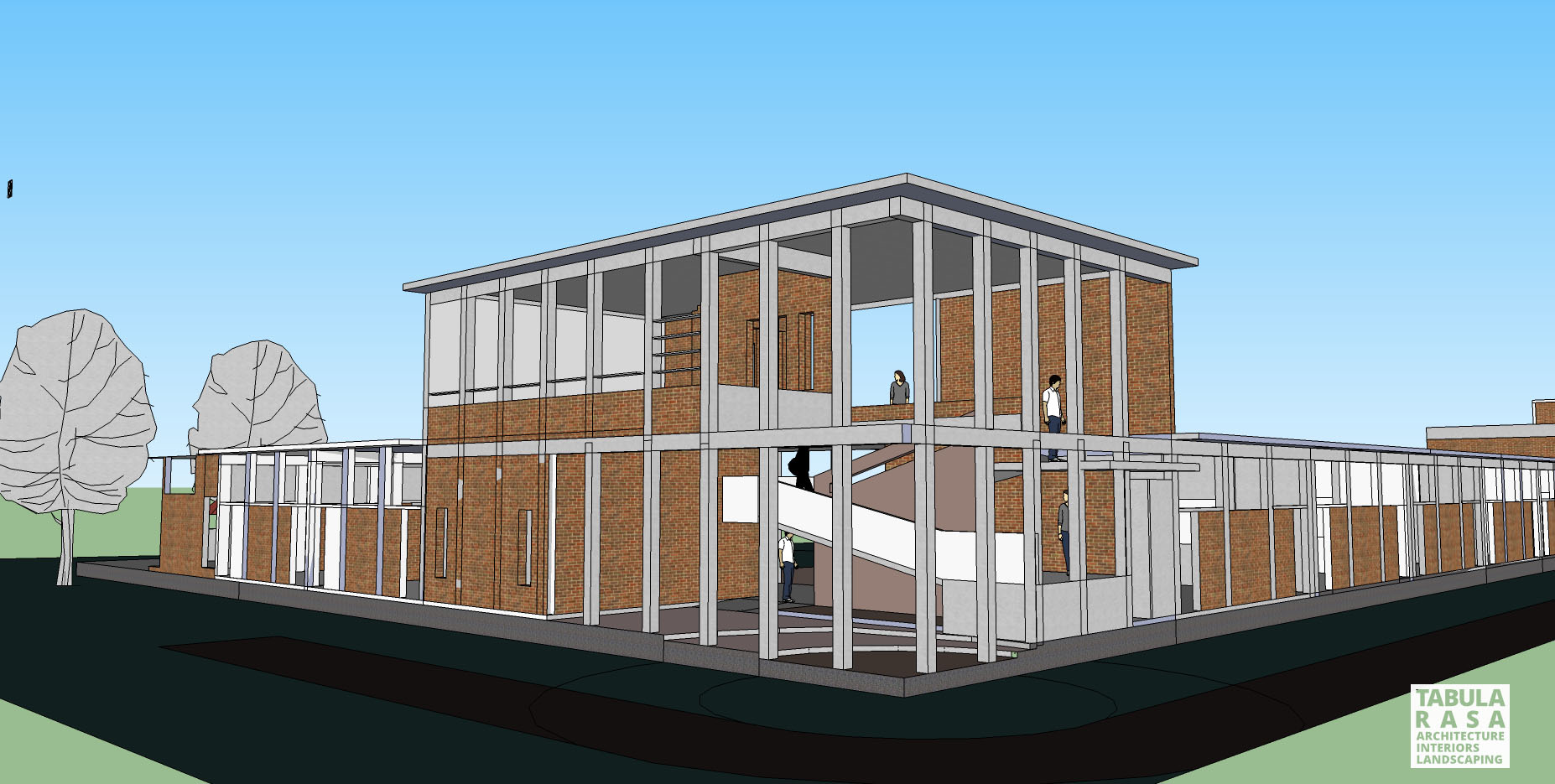
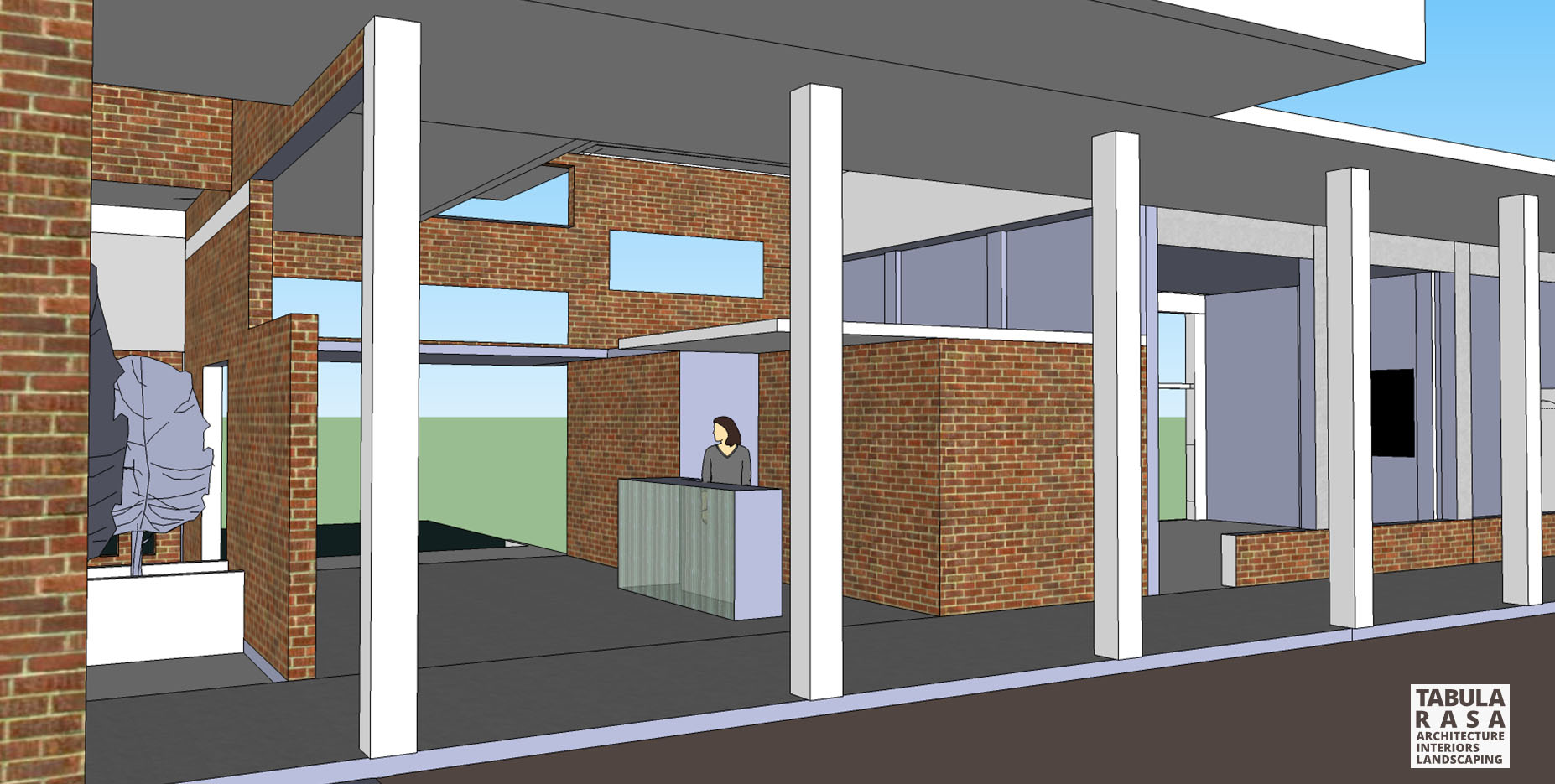
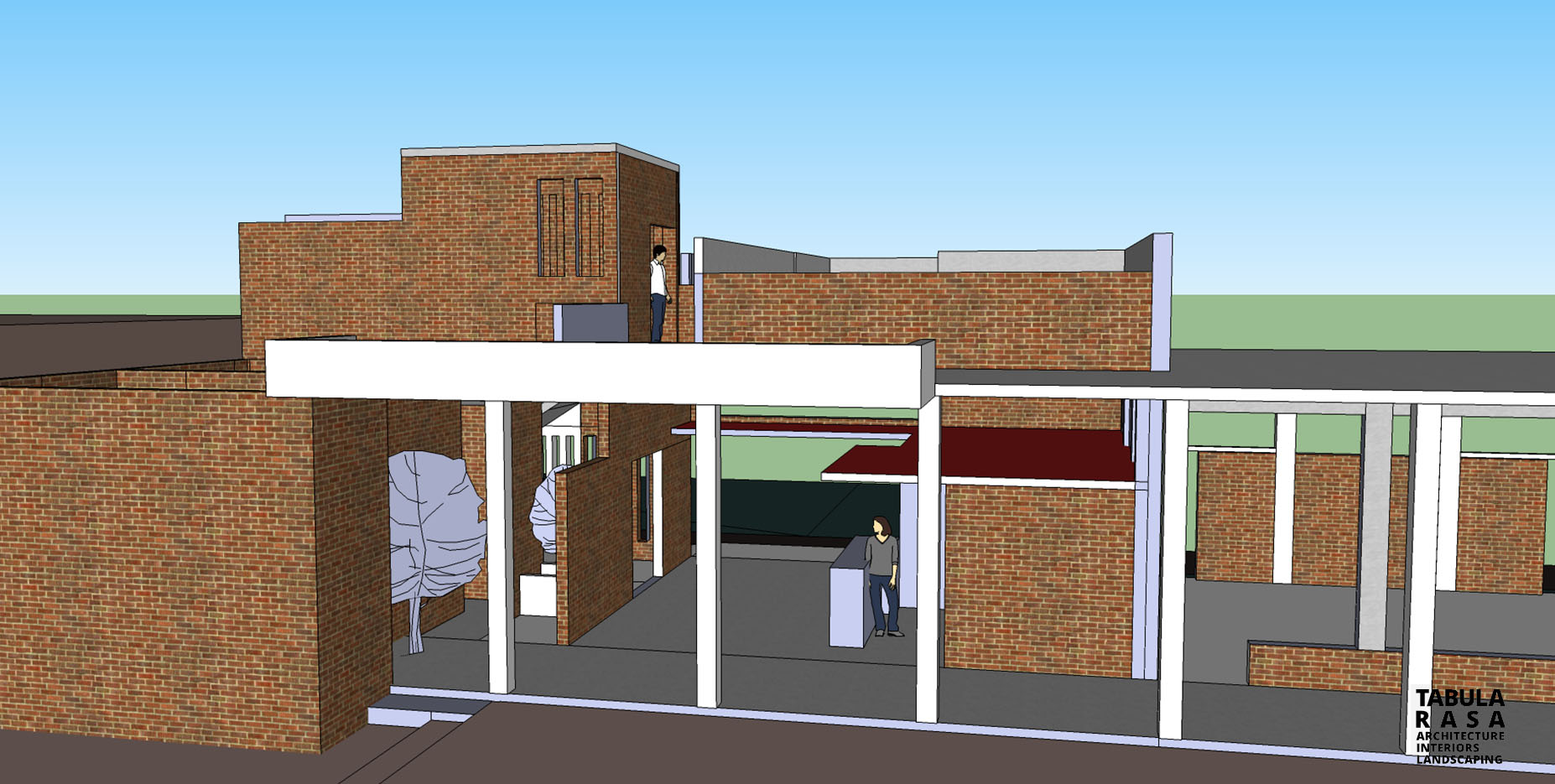
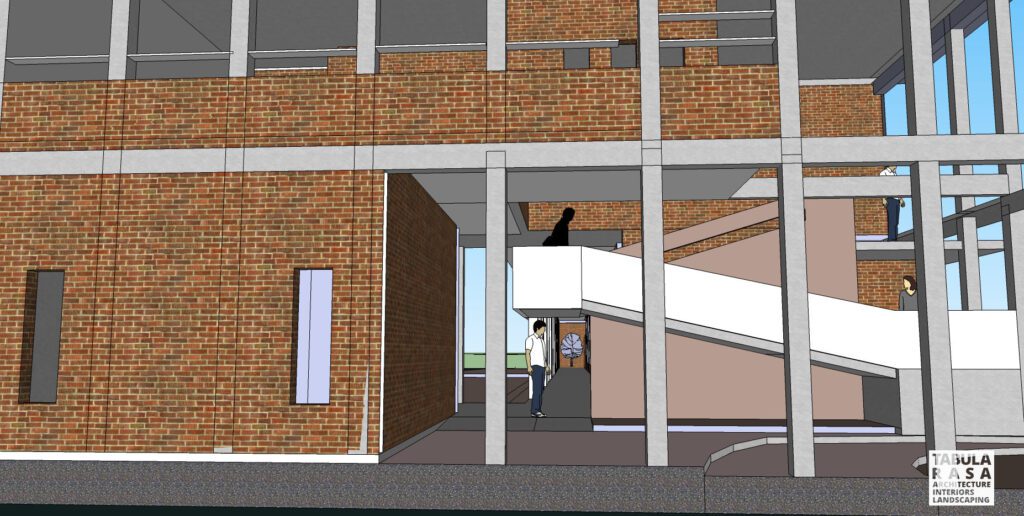
Deep verandahs wrap around the central assembly space in an “L” formation, providing shaded circulation and informal gathering zones. The open reception area unfolds as a sequence of interconnected volumes, punctuated by small courtyards open to the sky. This spatial progression leads naturally to essential services such as staircases and toilets, establishing a welcoming and immersive experience from the moment one enters the campus.
Accessibility and Vertical Movement
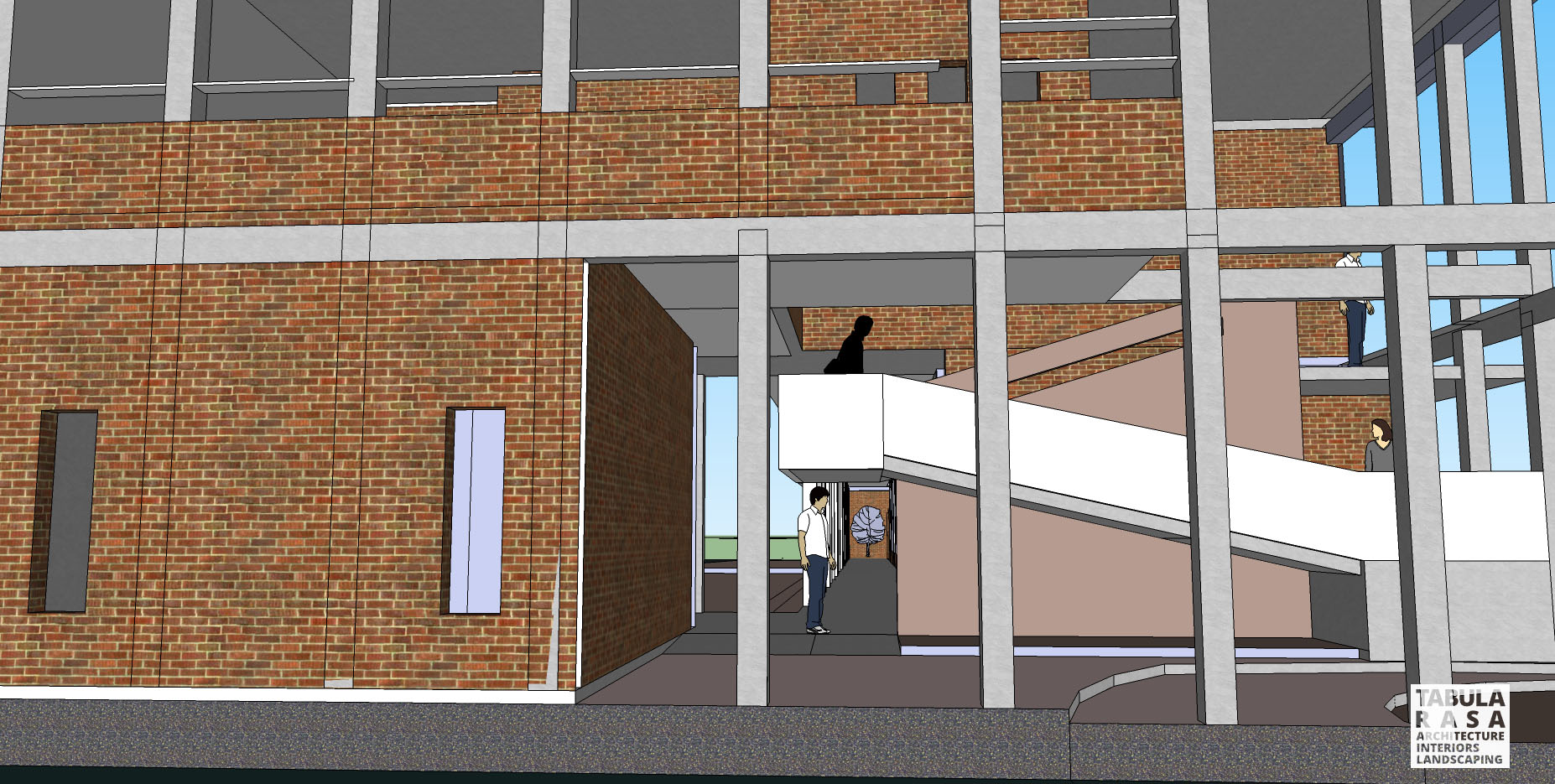
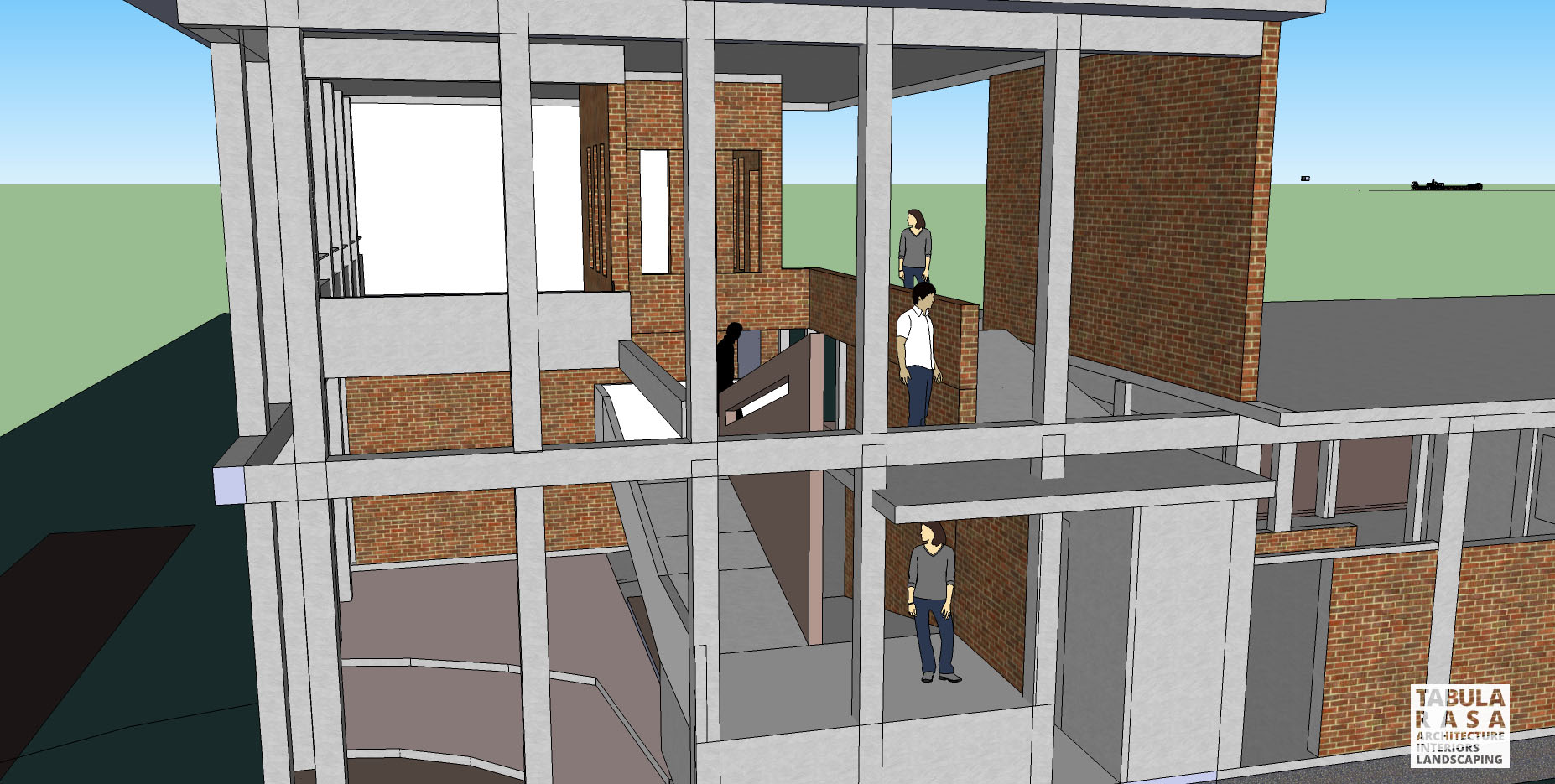
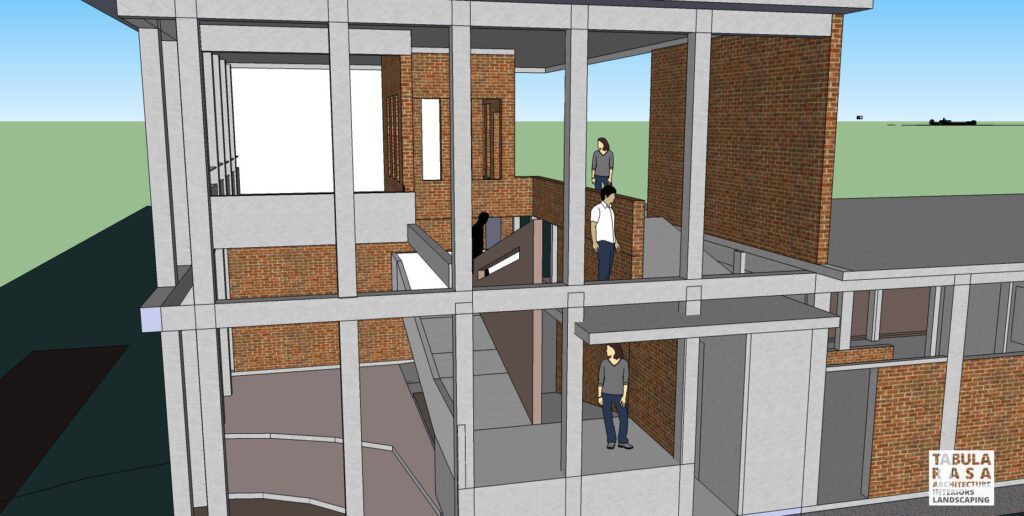
Universal accessibility is integral to the design. A gently sloping ramp provides access to the upper floors, where additional classrooms and the library are located, ensuring ease of movement for all users.
Library as a Light-Filled Retreat
The library is conceived as a quiet, contemplative space filled with natural light. Large windows in the reading areas and clerestory openings along the book aisles bring in daylight while offering views of treetops and the sky, creating an environment conducive to focus and reflection.

Dining and Informal Interaction Spaces
A semi-open dining area, shaded by canopies and furnished with built-in benches, serves as a space for shared meals and informal interaction among students of different age groups. Surrounded by trees and greenery, this area reinforces the school’s emphasis on community, wellbeing, and a respectful engagement with nature.
