
Independent house with two residential units
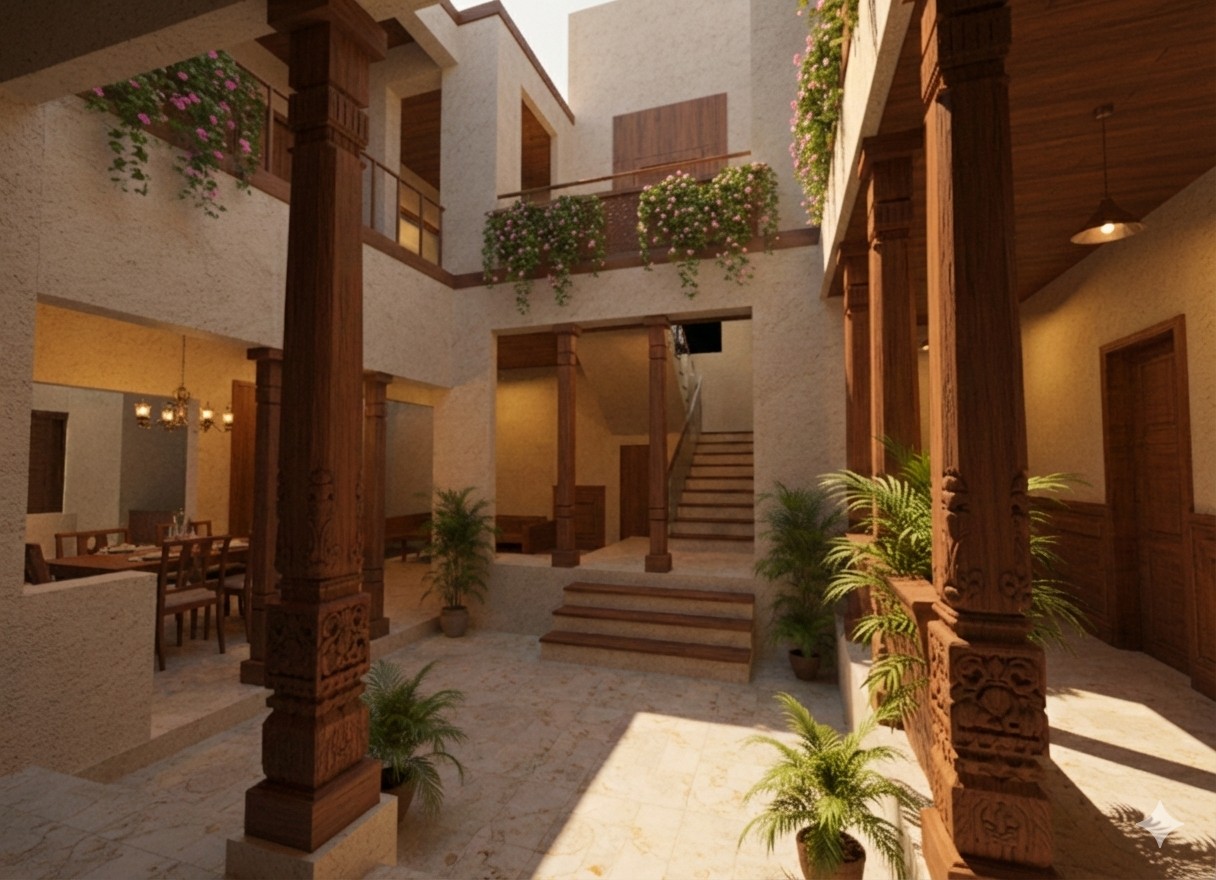
Designed on a long, narrow plot in suburban Chennai, this project comprises two independent houses planned as separate buildings, each organised around a central courtyard. The inward-looking layout draws from traditional residential planning while responding to climate, context, and Vastu principles.
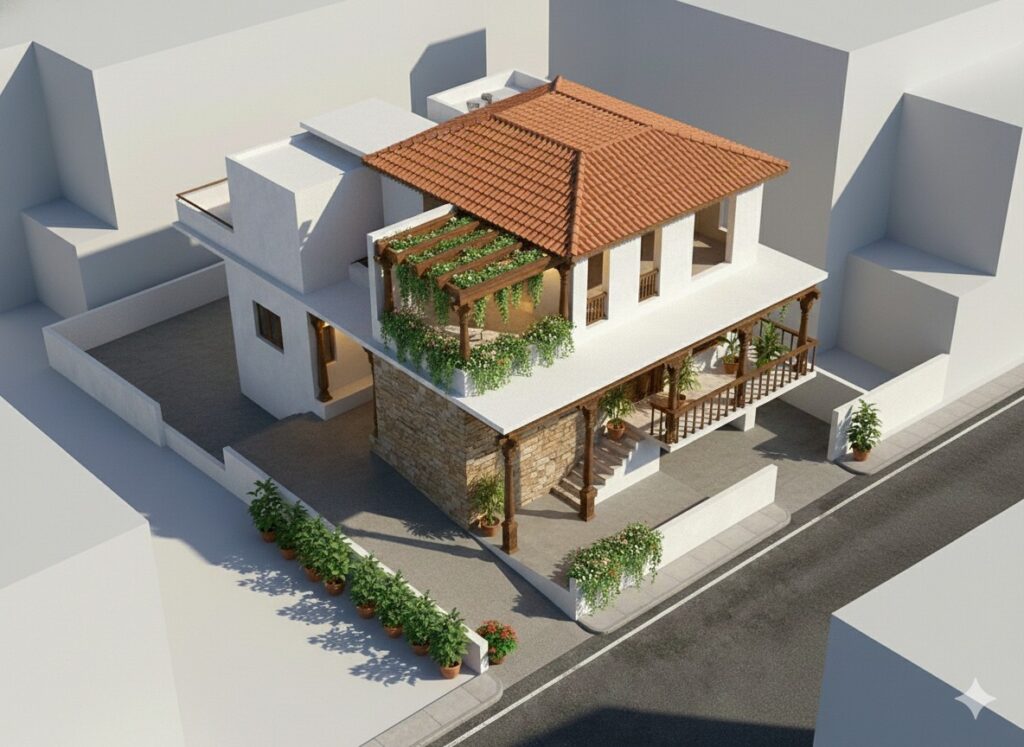
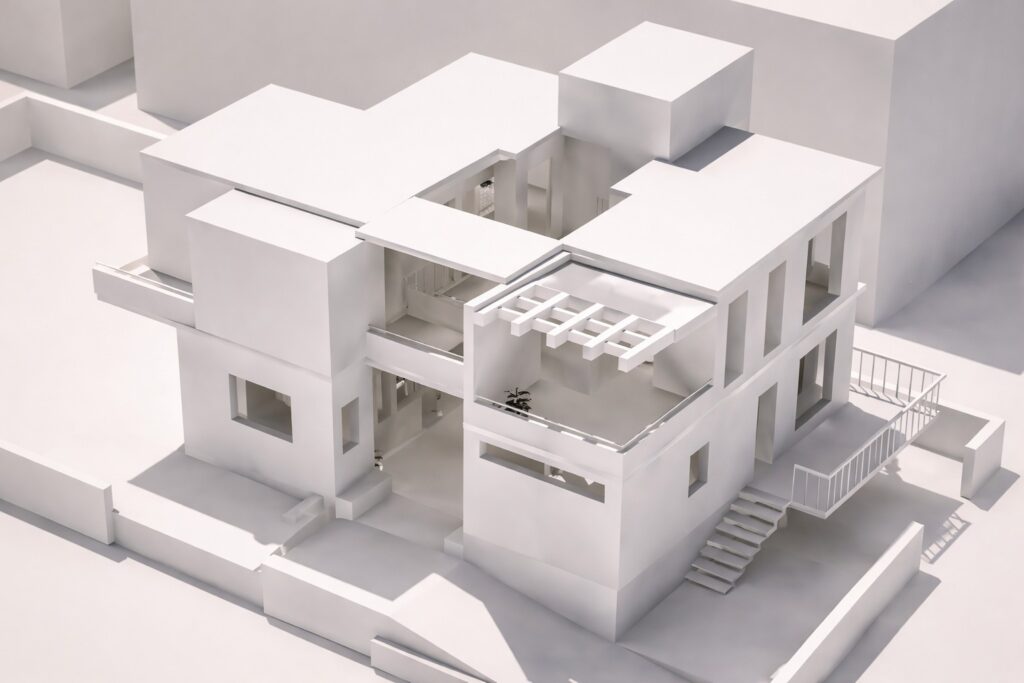
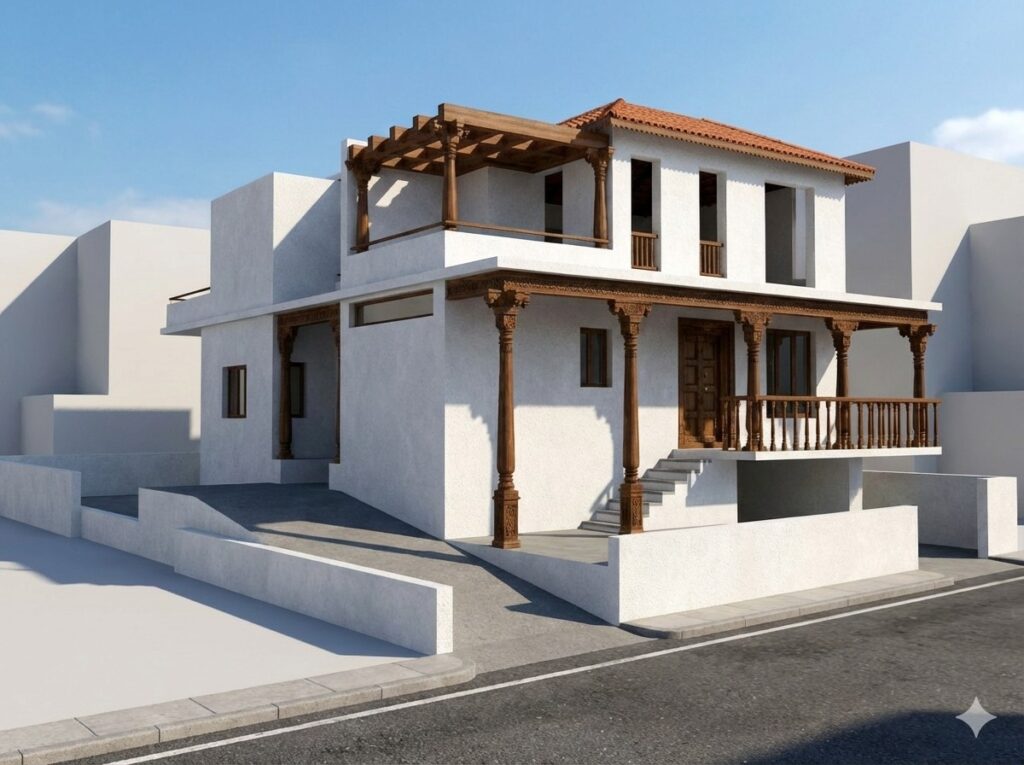
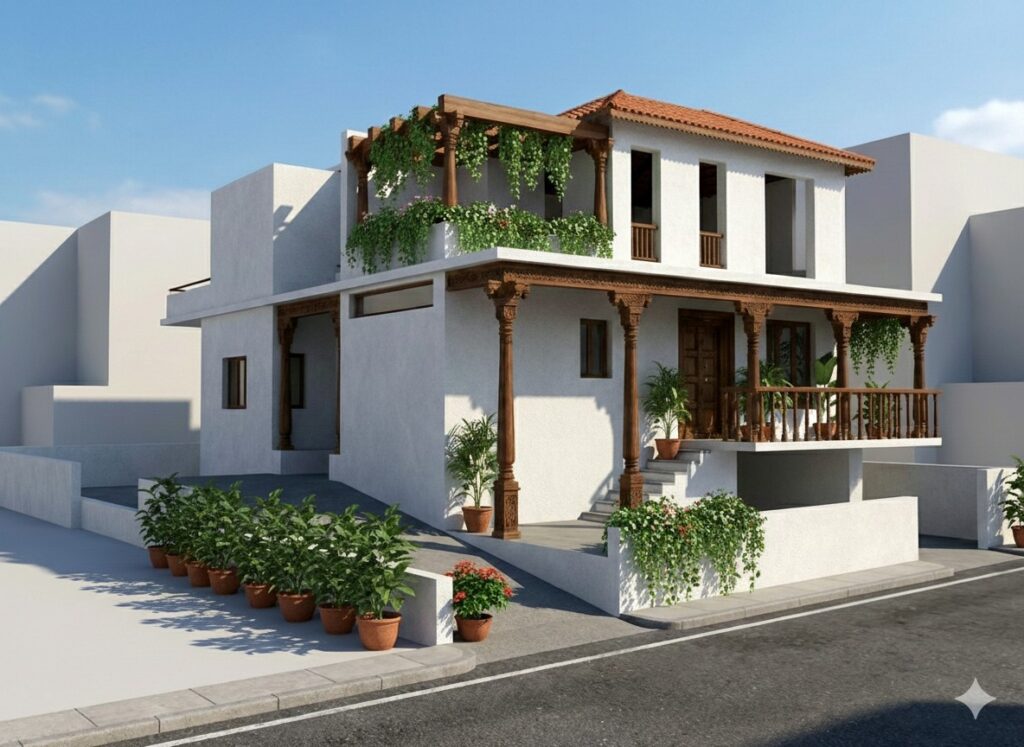
Each house is structured around a light-filled courtyard that becomes the spatial and environmental heart of the home. A retractable glass roof allows the courtyard to remain open while offering protection from heat and monsoon rains when required.
The two buildings are visually connected by a bridge at the first-floor level, creating continuity without compromising privacy. Movement within the homes is organised along a semi-open corridor supported by traditional wooden columns, recalling verandah-like circulation typical of older domestic architecture.


Sunken parking allows the living spaces to remain raised above street level, while balconies and terraces act as shaded transitional elements between the house and the outside. Spaces are distributed across two levels, offering a gradual shift from public to private zones.
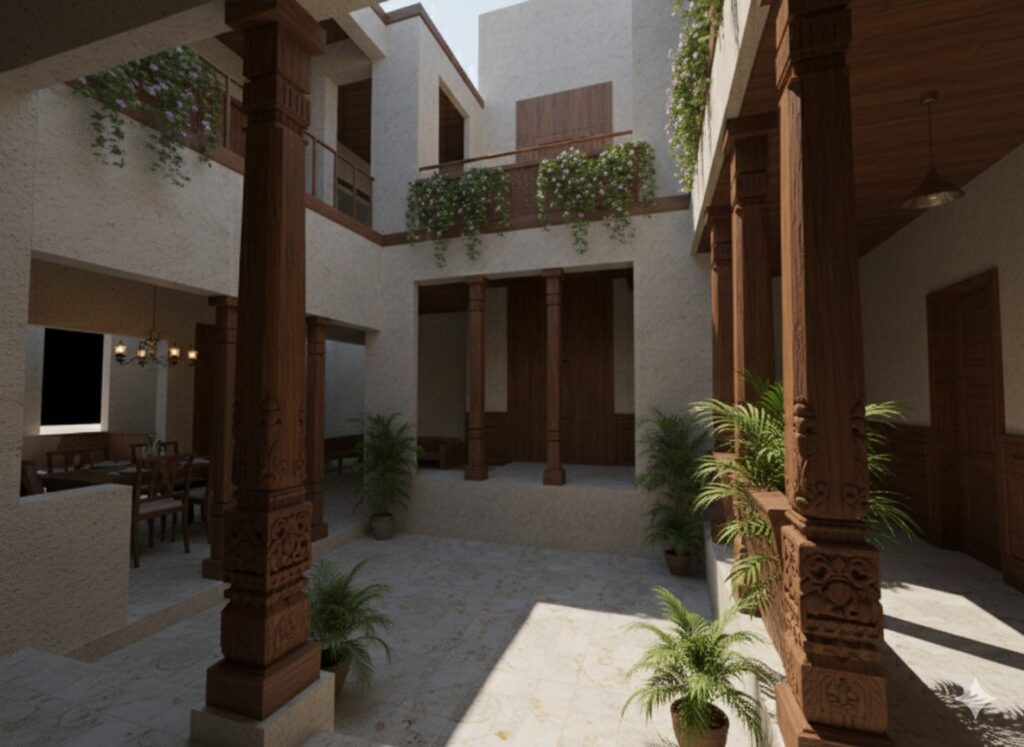
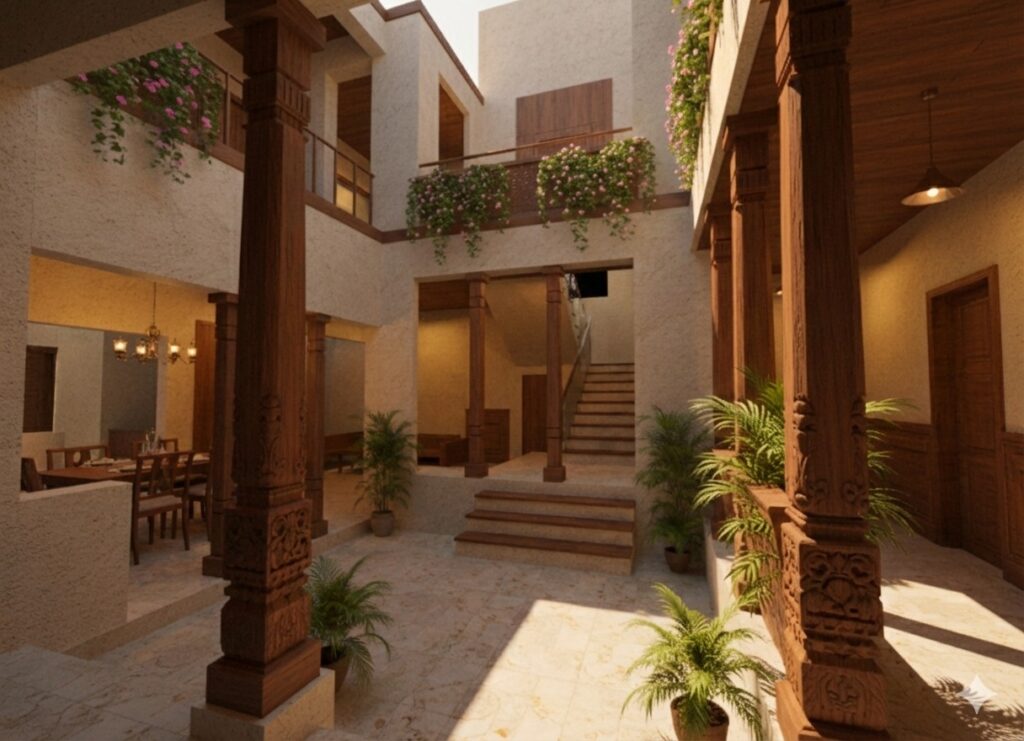
Rooted in traditional spatial principles and expressed through a contemporary architectural language, the houses balance inward focus with controlled engagement with their surroundings.
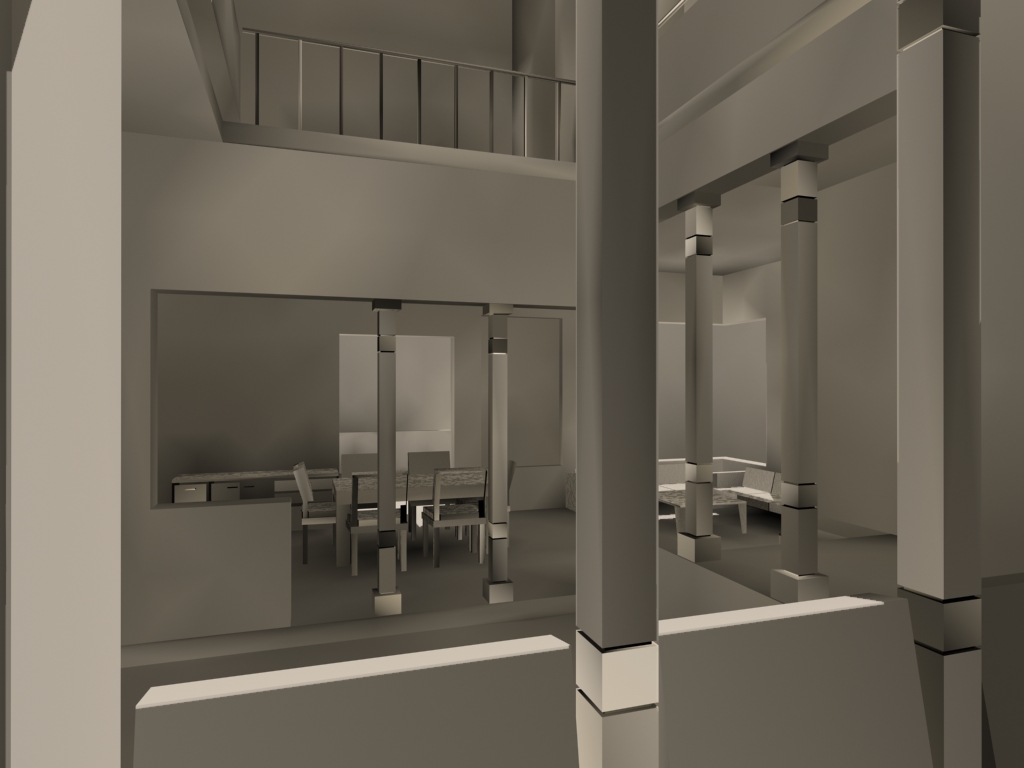
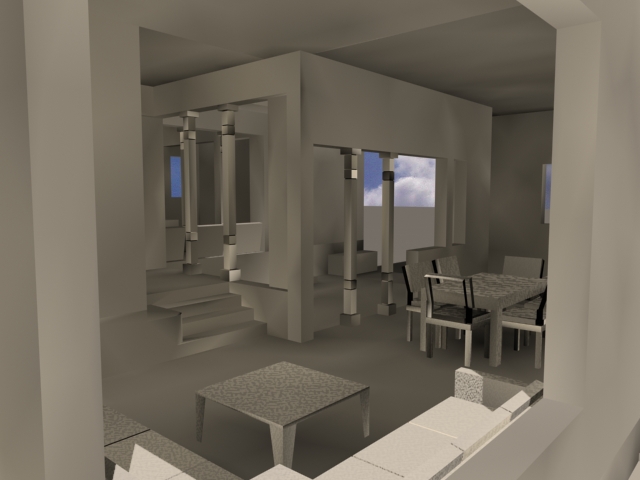
The rear building has a two-bedroom unit on the ground floor and a duplex unit with three bedrooms and a study spread over the first and the second floor. It has a double-height living room which is overlooked by the study and bedrooms on the second floor. The visual expanse of the space from the top floor extends all the way to the bridge connecting the two buildings and creates a private sanctuary for its inhabitants. The openings and roofscape were designed to maximize the sun-angle for Chennai to ensure that the houses were brightly lit throughout the day and that close proximity of these buildings did not hinder their access to light and ventilation.